


Le blog des particuliers
What financial support is available for renovating your holiday let?
Are you thinking of renovating your holiday let?
Renovating a second home or a holiday let is often a key step :
- to improve comfort,
- attract holidaymakers,
- meet new energy efficiency requirements,
- and, above all, increase the value of your property.
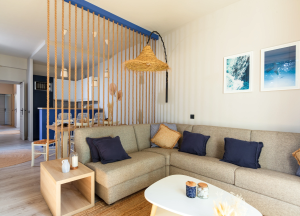
Before :
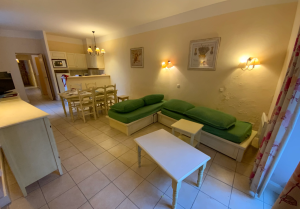
After :
Good news: even though renovation grants are more limited than for main residences, there are several financial and tax incentives that can help reduce the cost of the work whilst maximising the property’s return on investment. And beyond the financial aspect, there are also practical support measures and services to help you with this project.
Our partner, Face B, supports numerous property owners every year with these processes, from the initial design right through to turnkey renovation in the mountains, on the coast or anywhere else in the country. Here’s what you need to know before you get started.
1. Energy-efficiency renovation grants available for second homes
Second homes are no longer eligible for most ANAH grants (such as MaPrimeRénov’), but several schemes remain available provided certain criteria are met.
1. Energy Saving Certificates (CEE)
CEE grants are currently the main form of national funding available for energy-efficiency renovations to second homes. They are paid out by energy suppliers (EDF, Engie, TotalEnergies, etc.) or their partners, provided the work is carried out by an RGE-certified (Reconnu Garant de l’Environnement) contractor.
💡 Examples of eligible work :
- insulation of lofts, walls or floors
- replacement of single-glazed windows
- installation of a heat pump or a high-efficiency stove
- heating control and programming.
👉 The amount varies depending on the nature of the work, the climate zone and the floor area of the property. Certain platforms, such as PrimesEnergie.fr or Effy, allow you to estimate the amount.
2. VAT reduced to 5,5 %
Another incentive : the 5.5% VAT rate applicable to energy-efficiency renovation work, including on second homes (provided the property is more than two years old). This preferential rate applies to labour and materials supplied by a contractor.
This covers :
- thermal insulation (attics, walls, floors);
- replacement of external joinery;
- high-efficiency heating or hot water systems;
- installation of efficient control and ventilation systems.
This reduction applies only if the contractor is RGE-certified and if the materials are invoiced by them; ‘direct’ purchases made by the owner are not eligible.
3. Temporary exemption from council tax
Some local authorities or inter-municipal bodies encourage renovation by offering a partial or total exemption from council tax (50% to 100%) for properties where energy-saving work has been carried out. There is no official list of local authorities, but you can contact your local authority to find out whether it participates in this scheme.
Conditions :
- the property must have been built before 1989;
- the works must be eligible for the Energy Transition Tax Credit (CITE);
- the measure must have been approved at local level (municipality, EPCI).
Check with your local council: these schemes are not automatic but can save you several hundred euros a year.
2. Tax regimes for holiday lettings
If you let out your property as a furnished let (Airbnb, Abritel, Booking, etc.), you are subject to the business profits tax regime. It is within this framework that the tax benefits relating to renovation, refurbishment and decoration apply.
The micro-BIC scheme
- Unclassified furnished holiday let – Income < €15,000 – 30% allowance
- Classified furnished holiday let – Income < €83,600 – 50% allowance
- ‘Residential’ furnished lettings (letting of my main residence) – Income < €83,600 – 50% allowance
Advantage : administrative simplicity. Limitation: no actual deduction of expenses or depreciation.
The simplified BIC scheme (LMNP or LMP)
This is the most advantageous scheme for property owners undertaking renovation, fitting-out or decoration work.
You can :
✅ deduct all actual expenses (building work, furniture, household appliances, linen, professional fees, loan interest, etc.);
✅ depreciate the property, furnishings and building works over several years;
✅ significantly reduce, or even eliminate, your tax liability on rental income.
This is the most commonly used solution for holiday rentals in the mountains and on the coast, where the amounts invested are higher.
3. Local assistance : ORILs (Leisure Property Regeneration Schemes)
What is an ORIL?
ORIL programmes are initiatives led by local authorities (often with support from the Region, central government or ANAH) aimed at renovating the ageing holiday accommodation stock: 1970s studio flats, outdated holiday residences, under-occupied blocks of flats, etc.
Objective :
- To improve energy efficiency and comfort for occupants,
- To modernise the resort’s image and bring back onto the market accommodation that is currently vacant or unattractive.
Where can they be found?
ORIL schemes have been carried out or are currently underway in several major mountain resorts (non-exhaustive list) :
- Tignes,
- Les Belleville (Les Menuires, Val Thorens),
- Les 2 Alpes,
- La Plagne,
Each local authority sets its own criteria: the property’s location, the targeted energy performance level, a commitment to let the property, etc. Property owners can receive :
- direct subsidies towards the cost of the renovations,
- assistance with project management,
- or even tax bonus or administrative support to help re-let the renovated property.
🔎 Please note : unfortunately, there is no up-to-date national list of local authorities offering this type of scheme. The most effective approach is to contact local organisations : the town hall, the community of communes, the tourist office, or the town planning agency.
👉 You can visit the ANIL (National Agency for Housing Information) website, which lists some of the local support schemes available region by region : https://www.anil.org/aides-locales-travaux/
4. Financing, renovating and enhancing the value of your property
Beyond the financial incentives, renovation remains a profitable investment in your property. A home that has been brought up to date, better insulated and tastefully decorated :
- uses less energy,
- is easier to let,
- and fetches a higher resale price.
Several studies show that a renovated and well-furnished property can generate up to 30% more income from short-term lettings.
And in mountain areas, where competition is fierce and the seasons are short, this difference in income can quickly recoup the cost of the renovation work.
With the help of our partner
FACE/B
From design to completion, FACE/B specialises in the renovation of holiday homes intended for rental.
The benefits of working with FACE/B as a property owner with l’Agence Vacancéole :
- A free consultation (by telephone or video call) with a FACE/B building works expert and an interior designer to help define the scope of your project.
- A free, detailed quote for your project (excluding structural work).
- A 5% discount on your project.
